A retail robot earns its place when it completes a store task with little help from staff. The global race matters to buyers only when machines can move goods, scan shelves, or guide shoppers through a working store.
- Shelf scanning needs reliable images, not a polished demo.
- Stock movement depends on payload, battery runtime, and safe motion.
- A store manager needs clear payback and a plan for failures.
Start with the store task
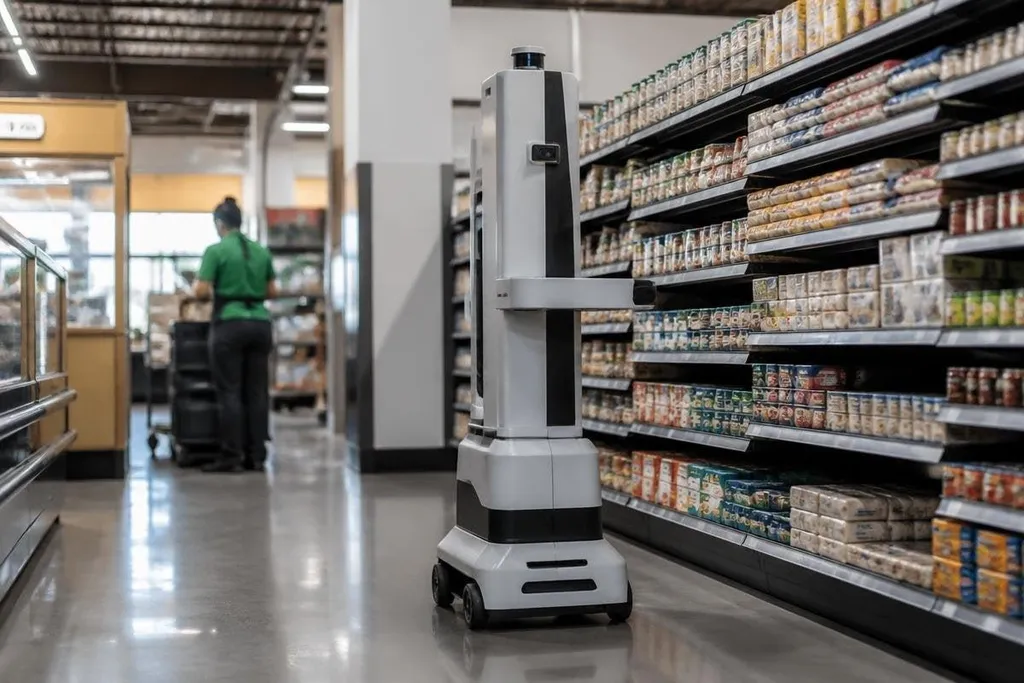
Retail covers very different jobs. A robot may scan shelf gaps, carry stock from a back room, move bins, clean floors, or answer routine questions. Each task needs a different body, sensor set, and safety plan.
A shelf-scanning robot needs cameras that can read labels at the correct height and under changing light. A stock-moving robot needs enough payload for the items it carries, plus a route that keeps clear of shoppers and staff.
That makes broad claims hard to judge. Ask for the exact task, the store layout, the number of staff interventions, and the conditions used during the test. A video of a robot completing one route says little about what happens after a shelf moves or a person blocks its path.
The numbers buyers should ask for
A serious retail robot proposal should include measurements that match the store job. Useful figures include:
- Payload in kg, including the tray or container.
- Battery runtime in hours under the stated workload.
- Travel speed in m/s, with people nearby.
- Shelf-reading accuracy under normal store lighting.
- Human intervention count per shift.
- Service time for charging, cleaning, and repairs.
These figures connect the robot to labor planning. If staff must guide it several times during a shift, the robot may add work instead of removing it. If charging takes place during the busiest period, runtime on a product sheet won't tell you much.
The same rule applies to software. A robot that uses LiDAR, a sensor that measures distance with laser light, still needs a map of the store and a safe response when that map changes. Ask how staff update blocked aisles, closed areas, and new displays.
Store traffic and the full cost
A factory robot usually works in a controlled area. A retail robot shares space with shoppers who stop, turn, carry bags, and push carts. That changes the job from moving along a known route to handling frequent changes without causing a safety problem.
The test should include crowded aisles, reflective surfaces, low shelves, dropped items, and a person standing still in the robot's path.
It should also record what the robot does after a failed scan or a blocked route. Recovery takes time, and that time belongs in the business case.
Retail owners should also ask who handles daily care. A dirty camera, low tire pressure, or damaged shelf label can reduce results long before a motor fails. The contract needs to state who checks the robot, who gets the alert, and how fast a technician must respond.
Retail robot claims need the store details behind the video: the aisle layout, task, shift length, human help, and result. Reporting from Robot 24 can put those facts beside named machines and companies, so you can judge whether shelf scans or stock counts work outside a staged test. That evidence belongs beside the full cost, because a robot that needs daily staff help may change the budget more than its purchase price.
The purchase price is one line in the budget. Add the charging setup, software fees, staff training, floor changes, service visits, spare parts, and any network work the robot needs.
A pilot can also hide costs. One store may have wide aisles, clean floors, and a staff member ready to help. A second site may have narrow routes and displays that change each week. Results from the first site should travel to the next only after those differences are measured.
I'd judge a retail robot by its unpaid minutes: time spent waiting, charging, being guided, or removed from service. Those minutes decide if the machine helps a store team or gives them one more system to watch.
Before you sign a pilot
Use this check before approving a trial:
- Define one store task and its current labor cost.
- Record the layout, aisle width, floor type, and lighting.
- Set a target for task success and staff interventions.
- Ask for failure logs, not only completed runs.
- Price service, software, training, and spare parts.
- Set a date for the go-or-stop decision.
A useful pilot should leave you with a repeatable number, such as completed shelf scans per shift or stock moves per hour. The next retail robot worth buying will be the one that can publish that number under store conditions, then keep it when the aisle gets busy.